
10. Elsa Schiaparelli
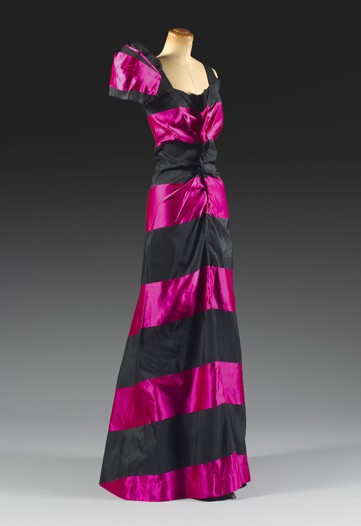
This Italian designer was known for her love of surrealistic art and she used this influence to great effect in her offbeat, irreverent designs. She is also known as the inventor of a bright pink shade known as “shocking pink”.
Born in Rome in 1890 to an aristocratic mother and an intellectual father, Schiaparelli soon rebelled against the conventional life of the upper classes. Her desire for exploration and experimentation landed her in hot water as a teen, when she published a book of poems with decidedly sensual overtones. Her work deeply offended her parents, who punished her by placing her in a convent. Schiaparelli was so determined to escape from the nunnery that she initiated a hunger strike which resulted in her release. By her early twenties she had fled to London, where she could live under less scrutiny. Later, during a foray in New York, she joined with artist friends and they all made their way to Paris…
In the City of Light, during the years from 1927 to 1940, Schiaparelli’s reputation for daring designs grew steadily. Soon, Parisians developed a passion for her unusual dresses, sweaters, and accessories. Her signature style always encompassed some whimsical elements, such as lobster motifs or skeleton ribs and bones (made with trapunto quilting); however, the construction of the garments themselves was often quite strict and tailored…this dichotomy made for original pieces that were often “knocked off” by other designers.
In fact, Schiaparelli’s designs were often all too simple to copy, unlike the work of her chief rival, Coco Chanel. After World War II, Schiaparelli, who had lived in New York during the war, returned to Paris and found a different sensibility among its people. The post-war desire for simplicity and practicality made the unique embellishments of her designs less popular, and the endless knock-offs also cut into her profits.
Schiaparelli’s fashion house closed its doors in 1964, but her achievements continue to inspire and amaze. In every sense, she was a pioneer, and her friendships with artists, such as Surrealist Salvador Dali and Modernist Man Ray, gave her work an unforgettable edge.
9. Christian Dior
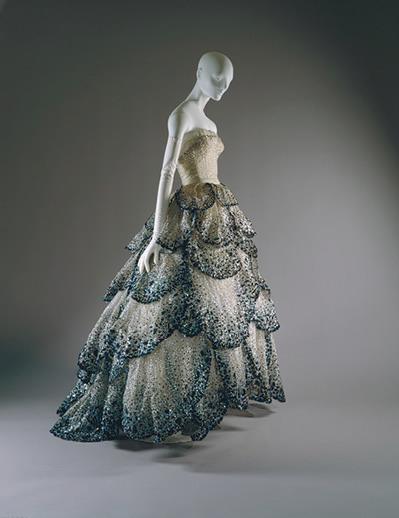
Born in January of 1905, this French designer was best known for his distinctive “New Look” silhouette. First shown in 1947; his suits and dresses revolutionized the way women dressed after the Second World War.
A designer with a notorious past, Christian Dior was also known for being in cahoots with the enemy during WWII, when he dressed Nazi wives and French collaborators in his designs. Despite this questionable choice, he still rose to prominence during the late-forties when the war was over…primarily due to his unparalleled mastery of line and shape. He gave women a desirable “flower silhouette” which always featured a nipped-in waist, a full, voluminous skirt, and a feminine, corseted bodice. Often, the hips of his suits and dresses were padded to balance the bust line and accentuate the wasp-waisted effect.
Dior died in 1957 under mysterious circumstances. It was rumored that he succumbed to a heart attack during a sexual encounter; others have reported that choking on a fish bone spurred his cardiac arrest.
Today, gifted designer John Galliano carries on the legendary designer’s legacy in Paris, where he creates dramatic couture ball gowns, chic prêt-a-porter, and luxurious accessories for Dior. Galliano’s talent and his over-the-top runway shows have ensured that the brand remains strong and viable in today’s world…
8. Roy Halston Frowick
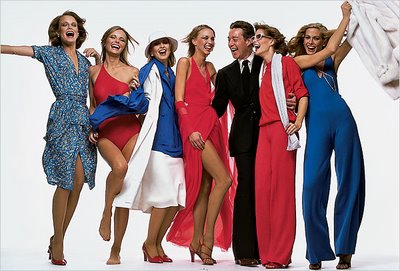
Roy Halston Frowick, better known as Halston, was an Iowa native who was born in 1932. His most famous designs were fluid, silky, and sexy – they became a symbol of 1970’s disco culture, with all of its freedom and decadence.
His interest in sewing and fashion started at an early age; as a young boy, he tailored clothes and created hats for his mother and sisters to wear. After graduating from high school, Frowick went to University in Indiana, but he lasted only one semester. Dropping out of University led him to a more creative life: he took night school courses at an art institute in Chicago and began to work as a window-dresser.
The hats Roy Frowick created in his spare time became his entrée into the world of high fashion. After garnering some publicity for his designs in a Chicago newspaper, he was able to open his first boutique in 1957. Around this time, he dropped his first and last names, opting for a more glamorous moniker that has became synonymous with American glamour…Halston.
Moving to the Big Apple was the next stage in the rapid career ascent of Halston; a stint working as a co-designer with lauded milliner Lilly Dache led to a gig at tony Bergdorf Goodman, where he became the house designer of fashionable hats.
Halston’s association with Jackie Kennedy was a crucial factor in his rising fame; she generally eschewed hats until she became charmed by Halston’s distinctive pillbox styles during the Sixties. She wore one of his designs to the Presidential Inauguration in 1961; she was also wearing a pillbox hat (in pink) on the day her husband, John F. Kennedy, was assassinated.
In the Seventies, Halston befriended (and dressed) members of the international jet set, including Bianca Jagger, Liza Minnelli, and Liz Taylor. Dressed in his trademark black turtleneck, he could often be found partying at Studio 54 and enjoying his success with a host of celebrity friends. Licensing deals made him very wealthy, but tragedy lay in the distance…drug addiction and an AIDS diagnosis in 1988 led to his downfall. Unable to cope with the demands of his career, he was fired from his own company…Halston died of AIDS-related complications in 1990.
7. Calvin Klein

Like Halston, Calvin Klein epitomized disco glamour in the freewheeling late Seventies. His tight designer jeans, which clung to the sleek bodies of the greatest beauties of the day, including the young Brooke Shields, cemented his fame and made him millions of dollars. However, Calvin Klein’s reign continued well into the 80’s and 90’s – his spare, stripped-down designs offered a minimalist perspective that carried a very modern message. The use of sexuality in his ads was often a keystone of his success; his campaigns were designed to send overt messages and perhaps to shock. Today, his empire is still strong, despite some turbulence in the late nineties: his suits, dresses, and couture still offer a unique viewpoint.
Born in 1942 in New York, Klein also capitalized on his own charisma and lean good looks. Throughout the decades, rumors about his own sexual orientation seemed to fuel the ongoing mystique and appeal of this designer. His biggest business rival, Ralph Lauren, was believed to envy Klein’s ability to charm so effortlessly, and to “work a room”.
Klein received his education at the renowned Fashion Institute of Technology in NYC. His Calvin Klein underwear line, as well as his array of successful perfumes, helped him to build his empire. His ability to choose the sexiest, hippest stars for his ad campaigns also revealed his tremendous savvy and perceptiveness: celebs such as musician/actor Mark Wahlberg and supermodel Kate Moss also benefited from his uncanny ability to read the zeitgeist.
6. Ralph Lauren
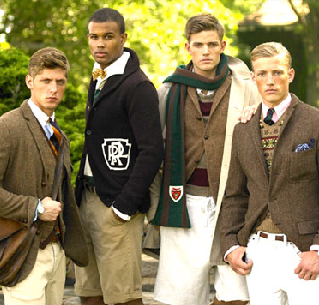
Born Ralph Lifshitz in 1939, this Bronx native changed his last name as a young man, due to years of cruel teasing from schoolmates. “It has shit in it”, he was known to remark, when he was questioned about his birth name and why he changed it.
Growing up, Lauren was encouraged by his mother to become a rabbi, but he chose a much different course. Influenced by the easy, preppy elegance of the country club set, as well as the glamour of old Hollywood, he chose to emulate the work of Brooks Brothers and other WASP-y retailers, creating a look that seemed to embody easy American elegance. His interest in luxury, refinement and a certain “taste level” put a different spin on the staid classics of the past.
Lauren first gained acclaim with his wide ties, which were often made of unusual fabrics. These standout accessories were not yet trendy in the late Sixties, when he began to try and sell them to New York stores. Soon, word spread about Lauren’s somewhat dandyish personal style and his flashy neckwear; he used this success to find investors and then he branched out into men’s and ladies suits and casual wear. Eventually, his clothing lines were sold at high-end stores such as Saks Fifth Avenue, where they became extremely popular.
In time, he opened his own stores, which mimicked elite mansions. Careful staging and set design made his shops unforgettable, but their construction, décor and maintenance were so expensive that they often made it difficult to turn a profit.
In the 80’s, Ralph Lauren really became a force to be reckoned with, as his signature polo shirts for men, with their ubiquitous polo pony and rider, became coveted items for many different demographics. Available in every color of the rainbow, they lined his coffers and allowed him to put more money into his glamorous women’s wear lines; he especially enjoyed producing couture pieces and overseeing glossy runway shows.
Ralph Lauren is known for his desire to control every facet of his company’s image: some of his ex-employees tell tales of a control freak with a quick temper and little patience for mistakes. In fact, the whole Lauren saga, with its many reversals of fortune and huge comebacks, was recorded with biting accuracy in the nasty, unauthorized tell-all book, Genuine Authentic.
Today, his basic polo shirts and khaki pants continue to remain the base of his empire, along with fragrances like Lauren (for women) and Polo, his famous men’s cologne.
5. Gianni Versace
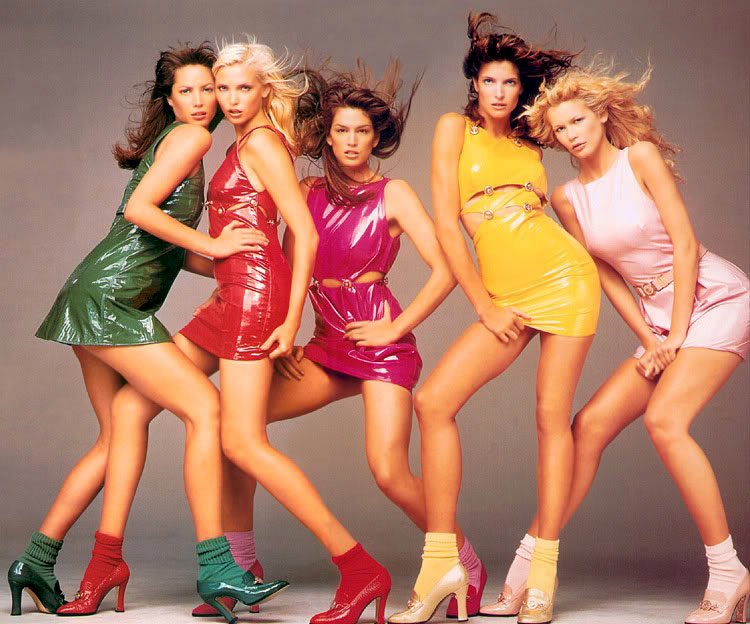
Flamboyant and so very Italian, Gianni Versace was born in December of 1946 in Reggio di Calabria, Italy. Gianni’s mother owned a tiny tailoring shop, and she supported her children through her sewing. The young Versace watched and learned as a boy, adopting techniques that he would put to exemplary use later on.
After years spent helping his mother embroider and tailor garments, he decided to study architecture; by the time he was 26, he changed directions again…he knew that fashion would be his life’s work. Versace moved to Milan to pursue his dreams…
Talented and charismatic, he soon drew the attention of VIP’s in the fashion world; they appreciated his chic knitwear and his creativity. Always influenced by art, Gianni Versace drew inspiration from ancient Roman and Greek paintings and sculpture, as well as modern abstracts and Pop Art – producing bold, current designs using color, prints, and careful fitting that accentuated the lines of the body,
A steady ascent through the ranks of the fashion world led to Versace’s creative independence, by the mid-Seventies he was producing lines under his own name. He began with women’s wear, but soon starting designing for men as well.
Versace was a homosexual and lived openly as a gay man; he found true love in 1982, when he met his life partner, an Italian model named Antonio D’Amico. They remained together until Versace’s shocking death in 1997.
This man, who was known for being kind, generous, and a doting uncle, succumbed to a gunshot wound inflicted by bitter social climber Andrew Cunanan, who killed himself just a few days afterward. Versace was only 50 years old when he died.
It is a sad fact that the lurid details of Versace’s murder sometimes overshadow the vast achievements of the designer, whose over-the-top, glamorous pieces gave the supermodels of the 80’s even more power and sex appeal.
4. Valentino Garavani
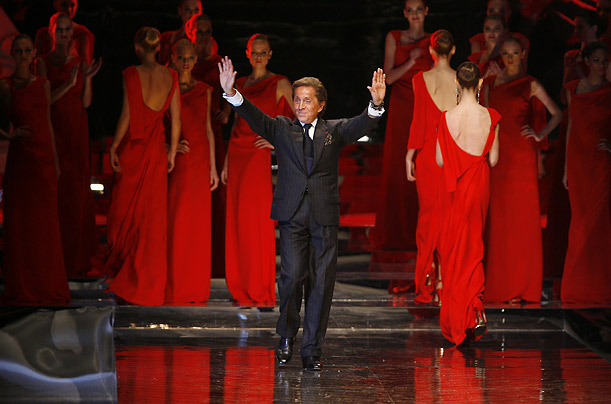
Valentino Garavani, better known as Valentino, was born in northern Italy in 1932. From childhood, he was interested in fashion, and he pursued apprenticeships and training from family and local designers. By his late teens, he was ready for Paris. His parents helped him to move there, and when he arrived, he began to study art and design in preparation for his chosen career.
Stints with notable fashion houses, such as Fath and Balenciaga, led him to connect with celebrities who recognized the originality and genius of his sketches. After five years with a luxe dressmaker in Paris, he was fired under a cloud of controversy; reputedly, he spent too long holidaying in Saint Tropez and was let go.
This development led to a more independent life for Valentino, who began to produce his own designs under his own name. In 1959, he returned to Italy and opened his first shop on Rome’s Via Veneto. His trademark scarlet dresses became his signature designs; women enjoyed the drama and femininity of his gowns.
In the 60’s, Valentino made a decision that would enhance his reputation; he sent Jacqueline Kennedy, the American First Lady and fashion icon, a series of his pieces to look over. She was enchanted with his designs, and even chose to wear one of his dresses when she married her second husband, Greek shipping tycoon Aristotle Onassis: her influence led to greater fame and fortune in North America.
Valentino is known for his flamboyant lifestyle and his love of luxury and beauty. He lives with his lover of 50 years in a series of lush villas throughout the world. His jet-set lifestyle and extensive collection of priceless art are not the only rewards he has received for his talents: France’s President Chirac also awarded him the Legion d’Honneur in 2006.
3. Giorgio Armani
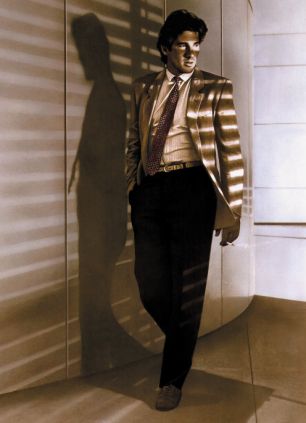
Another Italian designer with a unique vision, Giorgio Armani was born in 1936 in Piacenza, Italy. During his early years, he dabbled in different careers, including photography and medicine. Like Halston, a stint as a window dresser at a department store opened up new horizons…
After working for renowned fashion house Nino Cerruti, he branched out on his own, delivering his first women’s wear collection in 1974. Armani’s designs were always influenced by menswear, and his immaculate tailoring and cutting gave his pieces a timeless air. He is famous for his deconstructed jackets, which feature a softer shoulder and a longer line.
Today, A-list stars such as Michelle Pfeiffer and Jodie Foster often opt for his evening suits and gowns when they walk the red carpet. Armani delivers elegance that is never overtly sexual or brash. For today’s power brokers and celebrities, owning Armani suits and separates is a status symbol – his clothes always send a message of quiet confidence.
Armani’s impact grew stronger after Richard Gere donned his designs during the filming of American Gigolo in 1980. Gere’s smoldering good looks and perfect proportions were the ideal complement to Armani’s clean, elegant pieces.
This Italian superstar’s career has not been without its ups and downs. Armani is known for being quite difficult and temperamental, and he is believed to have disliked one of his chief fashions rival in Italy, the late Gianni Versace. In 1996, he pleaded guilty to charges of corruption – he was convicted of bribing tax officials.
2. Yves Saint Laurent
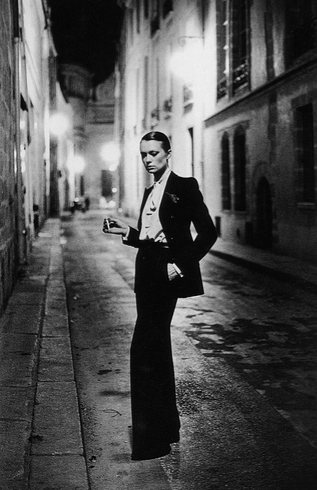
Born in Algeria in 1936, Yves Henri Donat Mathieu Saint Laurent’s gifts were apparent from a young age. After winning third prize in an important contest held by the International Wool Secretariat, he made his way to Paris and met with French Vogue’s editor, who was very impressed with the innate talent of Yves Saint Laurent.
Shortly thereafter, he began to work closely with Christian Dior, who was nearing the end of his life. Dior recognized the skill and creativity of his young protégé, and he chose him as his successor. When Dior died of a heart attack, Saint Laurent found himself holding the reins of one of France’s most venerable fashion houses: he was only 21 years of age.
Known for his stunning couture designs and his sophisticated women’s tuxedo jackets (known as le smoking), Saint Laurent was destined to carve out his own identity, but his career was not without its challenges. After a poorly received collection at Dior, which featured hobble skirts and other unusual designs, he was sent into mandatory military service. The stress of being in the army (although he lasted only 20 days) took a tremendous toll on the sensitive designer. He suffered from teasing and hazing by his fellow soldiers, and he soon plunged into a nervous breakdown; he was sent to a mental hospital for treatment.
During his short military service, the House of Dior fired him. A series of harsh treatments (including powerful drugs and electroshock therapy) at France’s Val-de-Grace Mental Hospital were thought to be the trigger for Saint Laurent’s later drug addictions and ongoing emotional issues.
He rebounded in the 60’s and 70’s, designing his own line and stunning Paris and the entire fashion world with his own brand of French elegance. However, the stress of his work led him to abuse booze and drugs; in time, the fragile designer’s health became precarious. By 1987, he was unable to fulfill his responsibilities, and allowed others to design his prêt-a-porter line.
In 2008, after living a life of a hermit for several years, Yves Saint Laurent succumbed to brain cancer and died.
1. Coco Chanel
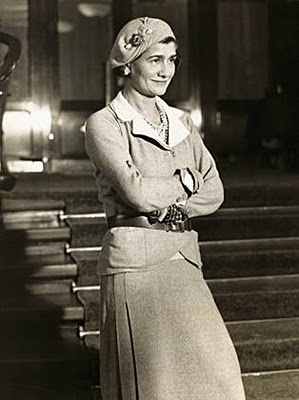
Born in August of 1883, Gabrielle Chanel was a French native who was destined to liberate women from the constraints of corsets and other uncomfortable garments. A true rebel and visionary, Chanel, who changed her name to Coco after a brief career as a singer, preferred to wear clothes she could move freely in; often, her style were imbued with a mannish aesthetic. Indeed, Coco Chanel, who designed her first cardigan to avoid pulling any garment over her head, was really the originator of modern women’s sportswear. Her desire for freedom and self-expression gave women style without sacrifice…
Her childhood was not easy; her mother died young, when Gabrielle was just six years old, and in time, the young girl was sent to live in an orphanage…the nuns who cared for her also taught her the rudiments of sewing.
Intelligent and pragmatic, Chanel used her powers of seduction to gain a foothold in the competitive fashion world; in succession, she became the mistress of two powerful and wealthy men. Both of her lovers were quite happy to use their money and influence to give her a start in business. From a beginning as a milliner, she rose to prominence in 1920, when her signature fragrance, the incredibly iconic Chanel No. 5, was launched.
The first true “Chanel suit” was produced in 1925; Coco used chains to weigh down the fabric, so that it hung “just so”. She favored ornamentation such as ribbons, pretty buttons, and ropes of pearls. Her feminine touches added style and impact to her wearable designs; in fact, even vintage Chanel designs remain remarkably timeless and easy to wear.
Chanel led a long and fascinating life, which included some darker episodes, such as an affair with a Nazi officer during World War II. He used his influence to ensure that she could continue to live in comfort at the Hotel Ritz during the conflict. Many wondered why Chanel was not charged for collaborating when the war ended – it is believed (and very likely true) that friends in high places protected her from retribution. Coco Chanel died in Paris, at the Ritz, in 1971.


