Top 10 Oddest Things People Have Used Facebook For

10.   The Man Who Tried To Ruin A Child’s Life Forever

Megatron
You’re reading something written by a guy with the last name Smallwood so, yeah, names can suck.  Most parents have the foresight to name their child something that isn’t going to result in the kid being punched in the back of the head on their first day of school.
That being said it didn’t stop this guy trying to name his sister’s child Megatron if his page received a million likes.  He reached his goal in less than two weeks, but thankfully his sister chickened out and named the kid Dylan.  That’s kind of a wuss name, but it’s not as hard to live up to as Megatron.  Because, unless that kid tears another child in half on his 8th birthday, he’s just not being Megatron enough.

9.  The Criminal Who Friended The Person He’d Just Robbed

robber-fb-friend
There are plenty of stories out there of criminals that have been caught for leaving their Facebook account logged in, in the houses they’ve just burgled.  But it takes a new level of stupidity to get away with your crime, casually stroll away with your dollar-sign sack, and decide to send a friend request to the person you just robbed of their worldly possessions.
It’s a pitiable crime, mainly because that guy now has to sit in jail and explain to his cell mate how he was caught because he was too stupid to realize that people don’t usually want to get to know the guy who just punched their wallet in the groin.

8.  Advertising Condoms, With Fear

babies-first-friend-request
Facebook is a boon for advertisers, with millions of people literally posting everything an advertiser could ever want into a public forum: what they believe, political views, favorite food, musical tastes, bra size; you name it, someone, somewhere will have posted it.
It was only a matter of time then, until people started getting creative with the Facebook platform, like this company.  They figured the best way to advertise condoms was to send men friend requests from their future, presently-unborn, children.
Although you have to respect the ingenuity, the idea of super-smart, Facebook-using babies, intent on tracking down their biological fathers to pester them about their sex lives is kind of terrifying.

7.  Organizing An Entire Community After A Riot

liverpool-clean-up
2011 saw unprecedented violence and destruction across the British isles, with millions of dollars in property damage, and entire communities and streets torn apart.  However, almost immediately after the violence, dozens of groups were set up arranging, among other things, clean ups of streets worst hit by rioters.
It was also used to help raise money for small, local businesses, including one where rioters destroyed the livelihood of an 89-year-old barber, even going as far to steal his kettle and tea bags, one of the worst crimes you can commit on an Englishman.  Facebook managed to give him his shop back.

6.  To Call An Ambulance

ambulance
Facebook is almost as ubiquitous as cell phone ownership, and it shows.  Take Peter Casaru, who suffered a near-fatal spinal spasm.  Being unable to physically call for help, he dragged himself to his laptop and typed out the following message: “Can someone call 999, Ambulance for me, I need one now. I have fractued my back. dtuck ob floor. no phone abd glasses, toucvh typing. please help me”.
If you’re looking at that and judging his spelling, try shattering your spine in two, and see how much you care about self-editing.  Luckily, Mr. Casaru’s friends believed his message and called an ambulance, which saved him from his potentially deadly injury.  Which means, among other things, that the only time it’s acceptable to have spelling mistakes in your Facebook updates is when your back is broken.

5.  Tracking Down The People Who Mugged You

batman-on-computer
Apparently criminals really like themselves some Facebook.  However, not all are stupid enough to brag about their crimes; some just get caught by having really recognizable, and certainly stupid and ugly, faces.
Daniel Kaye, after being mugged, was perusing Facebook and saw, staring back at him, the smiling face of his attacker, tagged in one of his sisters’ pictures.  Far from questioning the company his sister kept, he quickly used the site to track down his muggers’ friends, and went to the police.  Netting them 12 years in prison.  So it’s official; Facebook can turn you into Batman.  A sad, sad shadow of what Batman actually is, but it’s still close enough to make you feel cool.

4.  Diagnosing An Illness

online-diagnosis
People upload pictures of anything to Facebook: their food, their stool and even their own children at times.
The latter of which was done by Deborah Copaken Kogan, who uploaded a picture of her child’s rash.  Although her choice in status updates was questionable, it was arguably the best possible thing she could have done.  As, by a remarkable coincidence, one of her friends recognized the rash as an incredibly rare disease.
Doctors, who’d misdiagnosed the rash as Scarlet Fever, quickly began treatment for the new, much cooler-sounding Kawasaki Disease, and saved the child s life.

3.  To Extend The Reach Of Law

police-online
If you’re a criminal, there’s the oft-used tactic called “you-can’t-arrest-what-you-can’t-find.  A sound tactic but, as I’ve already covered, criminals love Facebook.  A lot.  So, in response, the police and courts have began using the site to track criminals and those accused, and serve notices online.
Apparently some people, who’ve taken to going completely off the grid to avoid prosecution, still really, really, really need to harvest those damn FarmVille crops.

2.  To Choose Who You Want To Sit Next To On A Plane

man-and-woman-on-airplane
Flying is stressful enough, what with safety checks and hiding vodka in against your thigh.  But even worse is spending six hours sat next to a person who spills into two seats, smells like a dumpster, or just doesn’t share your views on radical veganism.
Well one flight company had an idea: Facebook Baby!  Now you can be a judgmental prick, and choose who you want to sit next to, based on their views or, more likely, how many picture albums they have labelled “pimps and ho’s party!”

1.  To Find Blood, Your Blood

socialblood-blood-types
Of all the things on this list, this wins, purely because it could one day save a life.  Maybe yours, but probably not, but wouldn’t it be cool if it did?
Socialblood is the brain child of Karthik Naralasetty, and connects people based on blood-type, thus facilitating the ability to quickly find a donor in a life-or-death situation.  Whether or not it’s going to be used by the vampire hoards to find the tastiest humans is yet to be seen, although it’s safe to say it absolutely will be.

Tape it FREE Edition - Available on the App Store!


Tape everything, tape them fast, tape them in style and get combos to maximize your score!

"Tape it" is a unique original and very innovative game.

The objective of the game is to score as many points as possible by sticking with tape the broken shapes that pass through the screen at certain points. More points will be rewarded by making combos.

The tape has limited size so you will have to perfectly tape each shape to increase your tape size and the combo meter. Run out of tape and it's game over!

Swipe your finger across the screen to tape the moving shapes. Avoid the 'X' spots on the shapes or you will lose your current combo and 500 Points!

Two modes are available to choose from. Arcade and Panic Mode.

Unlock cool new tapes and amazing backgrounds by completing specific challenges.

Top 10 Discoveries in Human Evolution


10.  Sahelanthropus Tchadensis

sahelanthropus-tchadensis
This extinct hominid species dates back to around 7 million years ago, although its exact location on the human evolutionary tree is controversial, since it pre-dates the divergence of human and chimpanzee species and there is only one reliable specimen: a cranium known as Toumai.  Discovered in the Djurab desert of Chad between 2001 and 2002 by a team led by Michel Brunet, the enigmatic Toumai skull suggests that the species had a head similar in size to that of a chimpanzee, and was bipedal like Homo Sapiens, but had far flatter facial features.

9.  Australopithecus Afarensis

lucy
The best known individual example of this species, which lived between 3.9 and 2.9 million years ago, was discovered in 1974 at Hadar in the Awash Valley in Ethiopia by Tom Gray and Donald Johanson.  A female, the remains were christened “Lucy’” because the Beatles song, “Lucy in the Sky with Diamonds” was playing repeatedly on a tape recorder as they subsequently celebrated at their camp.  Lucy has a valgus knee, which indicates that she walked upright, a pubic arch similar to modern human females, and probably had ape-like facial features.

8.  Neanderthal Infants

neanderthal-baby
Recent research directed by the University of Oxford and the University of Cork, alongside the University of St. Petersburg, suggests that Neanderthals probably died out much earlier than had been previously thought.  The Oxford Radiocarbon Accelerator Unit allowed scientists to directly date the fossil of a Neanderthal infant found in the Mezmaiskaya cave in the northern Caucasus to 39,700 years ago, making it 10,000 years older than original research suggested.  It is now believed that any interaction between modern humans and Neanderthals would have lasted a few hundred, rather than a few thousand years, and that, in some regions, Neanderthals may have been completely extinct before modern humans moved out of Africa 65,000 years ago.

7.  Sex With Neanderthals!

sex-with-neanderthals
DNA evidence discovered by a team of scientists, led by Professor Peter Parham at Stanford University School of Medicine, suggests that modern humans who left Africa 65, 000 years ago, mated with Neanderthals and Denisovans from Europe and Asia.  This interbreeding caused genetic changes, which can still be traced in the DNA of all living humans, and also boosted our immune systems considerably.  Neanderthal and Denisovan immune system-related HLA genes represent half of such DNA in modern European and Asian populations, but only around 7 % of such DNA in modern African populations, which suggests that some modern humans carrying the new genes then returned to Africa much more recently, perhaps around 10,000 years ago.

6.  Ardi

ardi
Ardi is the moniker given to the skeletal remains of a female Ardipithecus Ramicus, who lived around 4.4 million years ago.  The oldest known and most complete hominid specimen, Ardi was discovered at Aramis, Ethiopia in 1994.  She stood four feet tall and weighed 50kg, a significantly larger specimen than Lucy.  Her remains suggest that the most recent common ancestor of chimps and humans was more human-like than previously thought, and that her society featured more pair bonding and increased involvement from parents in the lives of their offspring.

5.  Homo Rudolfensis

homo-rudolfensis
Discovered by Bernard Ngeneo in 1972 at the east side of  Lake Turkana in Kenya, this skull specimen is around 1.9 million years old, and was first thought to be representative of the Homo Habilis species.  However, its reconstructed characteristics suggested that it was actually an example of a separate contemporary species.

4.  Turkana Boy

turkana-boy
This almost-complete skeleton dates back 1.5 million years, was discovered by Kamoya Kimeu near Lake Tirkana in Kenya in 1984, and is the most complete early human skeleton ever unearthed.  Turkana Boy was around eight years old when he met his demise, and is classified as a member of the Homo Erectus or Homo Ergaster species.  At 5’3” tall, he may have reached an impressive 6’1” in adulthood and weighed in at a substantial 68kg.  He would have been capable of running to hunt prey, and had a human-like protruding nose!

3.  Peking Man

peking-man
Discovered between 1923-1927, this group of Homo Erectus skeletal specimens is dated at almost 800,000 years old, and was discovered by Johann Gunnar Andersson and Walter W. Granger.  The Peking Man remains were classified as Sinanthropus Pekinesis by Canadian Anatomist Davidson Black, but further excavations to the site finished with the Japanese invasion of 1937.  The fossils disappeared in 1941, en route from China to the USA for safekeeping, but parts of another skull were discovered at the site in 1966, and excavations re-started in 2009.

2.  Cheddar Man

cheddar-man
Discovered in 1903 in Gough’s Cave in Cheddar Gorge, Somerset, these remains date to around 7150 BC, and have a hole in the cranium which suggests that he may have met a gruesome demise.  In 1996 Brian Sykes of Oxford University successfully sequenced the mitochondrial DNA from a sample from Cheddar Man’s tooth and compared it to that of 20 living residents in nearby Cheddar Village.  One match with a single mutation was discovered, as well as two exact matches.  The mutated match was, appropriately enough, a History teacher named Adrian Targett, whilst the exact matches were two unnamed schoolchildren.  All three, in the same area, share a common ancestor in Cheddar Man.

1.  Otzi the Iceman

otzi-the-iceman
AKA Simalaun Man, Otzi is actually the well-preserved, naturally mummified remains of an individual who lived 5,300 years ago.  Found in 1991 at the Oztal Alps on the border of Austria and Italy by Helmut and Erika Simon, two German tourists from Nuremberg, Otzi was approximately 45 at the time of his demise.  He stood five-and-a-half feet tall, weighed 50kg, and analysis of the contents of his intestines revealed that his last meal consisted of red deer and herb bread.  He was also found with a copper axe, sported several carbon tattoos, and probably died as a result of a violent confrontation with rival tribesmen.


Top 10 Reasons To Visit Ireland

10.  National Leprechaun Museum (Músaem Náisiúnta na Leipreacháin)

national-leprechaun-museum
Yes, you read that correctly.  In Dublin City centre, we have a museum devoted entirely to leprechauns.  Being a self-respecting Irishman myself, I have, of course, never been to this establishment, and was mortified when I read it was opening.  But we’re all tourists somewhere, and the same way I’m sure every New Yorker sighs each time an out-of-town visitor asks to go see Central Park, The Statue of Liberty, The Empire State Building, etc., I know that this is a huge attraction for North Americans of Irish heritage.  Featuring pots o’ gold and rooms filled with giant furniture to make you feel like a leprechaun, it would be a shame to travel to Ireland and not stop in.  At least ironically.

9.  Gaeltachts (Irish-Speaking Areas)

Gaeltachts
Some people think we only speak English in Ireland.  Others think we don’t speak English at all.  Some think our language is called “Gaelic” (it’s not, nor is Gaelic any one language at all).  One person I met even thought that, by saying I can speak Irish, I meant that I speak English with an Irish accent.
The truth is, for the majority of us, English is our first language.  But over a quarter of the population is fluent in Irish, and Gaeltachts are designated areas, protected by the Government, that live life through Irish on a day-to-day basis.  These are mostly on the west coast, as this was where Irish families were forced when Cromwell invaded from Britain.  The reason I have the English in parentheses is because nobody refers to them by anything other than “Gaeltacht”.
For an example of the Irish Language (called Gaeilge), watch this weather report.
And here are some written pronunciations to give you an idea of how unlike English it really is:
Glendalough (“Glen da lock”)
Ranelagh (“Wren a la”)
Dun Laoghaire (“Done Leary”)
Saibhne ó Gríobhthá (“Sev nah Oh Gree Oh Faw”)

8.  The Skellig Islands (Na Scealaga)

Skelligs
The Skellig Islands are two small Islands off the coast of Country Kerry, in the Southwest of Ireland.  The islands are famous for a number of reasons, one of which is that they are extremely steep and jagged.  The islands are located in the Atlantic Ocean, meaning the water can be extremely unstable.  For this reason, the islands are only accessible when the water is calm, usually in the summer period of the year, as any boats attempting to dock in the rough water could be rising and falling as much as 30 feet.
The larger island, Great Skellig, is home to a 6th century monastery, with many of the buildings having the iconic look of resembling stone igloos.  The islands are also known for the wide range of birds that can be found here, as well as seals, sharks, whales and dolphins that live in the water.

7.  Newgrange (Sí an Bhrú)

newgrange
One of the things that irks me most about Irish tourism is how much less well-known Newgrange is than Stonehenge.  Newgrange is far more impressive architecturally, aesthetically & functionally.  The site was built around 3200 BC, making it older than not only Stonehenge, but also every one of the Seven Wonders of the Ancient World.  When built, Newgrange was used for many reasons, including storage, burial, and (albeit disputed) religious ceremonies.
But its most important & famous use is that the site was designed and built in such a way that, on the day of the winter solstice, the sun shines through a small opening above the entrance, and reflects off a number of quartzite passages, which illuminates the whole chamber.  This is when the days of the year start to get longer, and would let the people know that it is time to start a new harvest year.  This feat is simulated for tourists throughout the year.  Newgrange was lost for about 4,000 years, and rediscovered in the 17th century.

6.  Guinness Storehouse (Stóras Guinness)

Guinness-Storehouse
Most of you will be familiar with Guinness.  It’s the most famous Irish drink, and we’re recognised for both it, and its record book, the world over.  But here are a few things most of you probably don’t know about our native stout, and the story surrounding it.  It was first made in 1759, making it 253 years old.  In 2009, the Guinness corporation celebrated the first “Arthur’s Day”, to commemorate Arthur Guinness.  The holiday quickly caught on, with the tradition being to raise your pint at 17:59 on September 23rd, and toast “To Arthur”.
But one of the most unique things about the Guinness storehouse is that Arthur Guinness leased the site for 9,000 years, for a moderate fee of £45.  Another thing most people don’t know, which can be very annoying for Irish people ordering the drink abroad, is that the drink is supposed to be poured from tap until the glass is 3/4s full, left to settle, and then topped up off.   The storehouse itself is a great place to tour, taking you around and showing you how the drink is made, finishing with a trip to a circular bar with a 360° of Dublin City, where you pour your own pint.

5.  Giants Causeway (Clochán na bh Fomhórach)

giants-causeway
Although this is located in Northern Ireland, which is currently a separate country and part of the United Kingdom, it is still on the Island of Ireland, and is a part of Native Irish folklore.  The Giants Causeway is another one of the Seven Natural Wonders of Ireland.  It’s an incredible area created by a volcanic eruption where the lava cooled almost instantly, leaving about 40,000, mostly hexagonal, columns.  The area derives its name from an old Irish legend, in which a warrior named Fionn MacCumhaill built the columns so that giants could step over to Scotland without getting their feet wet, presumably because they had just bought new shoes or something.  But I’m pretty sure it was really the volcano thing.

4.  Book of Kells (Leabhar Cheanannais)

book-of-kells
This book was written around the year 800, and is a Latin manuscript containing the Gospels of the New Testament, as well as a large amount of artwork.  This is one of the most famous historical artifacts in Ireland because of the extremely elaborate and artistic calligraphy.  Like most manuscripts from that era, the book is written on vellum (calf skin), and was written by monks.  Its most iconic feature is that the first letter of each page is the biggest and most elaborate on that page, taking up a large chunk of the top left.  And of course, life being as cruel as it is, one of the monks once started a new page and, upon finishing the elaborate first letter (which could take days), realised he’d done the wrong one.
The Book is housed in Trinity College, Ireland’s oldest University, and (obviously) kept in protective casing.  However, they only turn one page per day out of the 340 remaining, so if you want to see the whole thing, you’ll have to move here for about a year.

3.  Connemara (Conamara)

connemara-ireland
Connemara is another area on the coast of the Atlantic, although the region itself is not properly defined.  The location is world-famous for its marble, although that’s not why I’m including it in this list (seriously, Ireland’s not THAT boring).  No, the reason I’ve included Connemara in my top ten is because it’s one of the best places to go in the country if you’re looking to hike or take part in watersports.  There are plenty of lakes and rivers that are among the most popular places to fish, kayak, etc., and the landscape is one of the most beautiful in the country.  The landscape is so famous, that part of one of Jupiter’s moons (Europa) is named after it.

2.  Oxegen

oxegen
Although not taking place this year, Oxegen is an annual music festival that takes place every summer.  Now I know every country has its music festivals but, since starting up in 2004, Oxegen has shot its way up to being widely regarded as one of the best music festivals in the world.  In 2011, it won Best Line-Up at the European Festival Awards.  More than 80,000 people attend Oxegen, and the line-up frequently includes a wide variety of acts, with artists such as Beyoncé, Muse, Eminem, Black Eyed Peas, David Guetta, The Who, and many more.
The general philosophy taken towards Oxegen is to buy the cheapest, most outrageous clothes you can find, stock up on alcohol, spend three days drunk and listening to your favourite artists, then leave with very little, and no parental-friendly, photographic evidence.  Oxegen returns in July 2013.

1.  Cliffs of Moher (Aillte an Mhothair)

Cliffs-of-Moher
The cliffs of Moher are listed as one of the seven natural wonders of Ireland, and are a protected Geo park. Peaking at over 700 feet tall, the cliffs range for about 8 kilometers (roughly 5 miles).  The cliffs are famous not only for their height, but also for the extreme weather it experiences, brought in by the Atlantic.
Many of you will actually have seen an example of this already.  The cliffs are featured in Harry Potter and The Half Blood Prince, in the scene where Dumbledore and Harry go to the cave where Voldemort has hidden the locket.  Because of the weather, the ten-second shot took three weeks to film.  Watch the scene, and you can see why this is such a tourist hotspot and, scarily enough, one of the most popular places in the country to surf.


Top 10 Best Foods For Brain Health

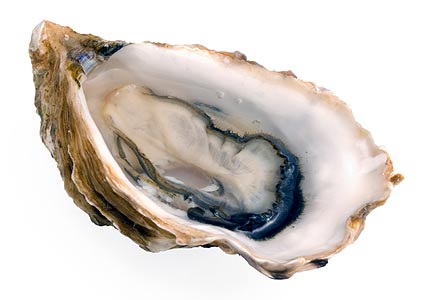
10. Oysters for Brain Health


If you’re a seafood kind of person, then today just may be your lucky day. Experiments have shown that oysters are great for your brain, no matter your age. Because they are rich in zinc as well as iron, eating this under-the-sea-delight will help to keep your mind sharp and increase your ability to recall information easily. Zinc and iron have been linked to the brain’s ability to stay focused and remember information. A lack of zinc and iron can result in memory lapses, poor concentration, and of course other ailments throughout the body.

9. Whole Grains for Your Brains


If you’ve ever tried to lose weight, you know just how healthy whole grains are for your body; however, they are also a great food for your brain. Whole wheat, bran, and wheat germ have high contents of folate, as do brown rice, oatmeal, whole-grain breads, barley, and others. All of these foods work to increase blood flow to the brain which means a higher quality and quantity of brain function. Also, these whole grain foods contain a lot of vitamin B6, which is full of thiamine. Thiamine is great for anyone trying to improve their memory. Scientific research has shown that memory loss dramatically increases by the time you reach your late 60’s or early 70’s; so whole grains are especially good for you as you get older.

8. Tea


Forget your coffee in the morning- try a cup of tea! Freshly brewed green or black tea is extremely beneficial to your brain because it is full of catechins. Have you ever had a day where you just feel drained, tired, and “too lazy” to think? It may be because you are lacking catechins in your brain. Catechins are great for keeping your mind sharp, fresh, and functioning properly. Not only do they keep your brain working right, they also allow it to relax and help to fight against mental fatigue. While green tea is much more potent than black tea, both are extremely good for you. Tea is definitely a great thing to drink early in the morning to ensure you’re starting your brain off right.

7. Eggs Help Keep Your Memory from Cracking


When we get older, our brains begin to shrink due to something called brain atrophy. While some of us might want other parts of our body to shrink, I’m pretty sure no one wants a shrinking brain. However, we can fight against this natural process by eating eggs. This is because eggs are full of vitamin B12 as well as lecithin. Vitamin B12 helps to fight against brain shrinkage, which is often seen in Alzheimer’s disease. Eggs, though very unhealthy if you eat too many of them, are full of essential fatty acids. The yolk, though very high in cholesterol, is also high in choline, which is a very important building block of brain cells. Choline can help improve your memory. While eating too many eggs can be bad for your health, eating 1-2 egg products a day can be great  brain food.

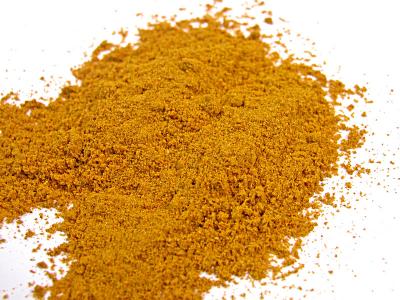
6. Curry to Spice Up Your Brain Health


This spicy food is a great way to spice up your brain and keep it fresh. A main ingredient in curry powder, curcumin is full of antioxidants that help fight against brain aging and maintain cognitive function as you get older. These antioxidants also fight against free radical damage that can occur within the brain as well as the body.  Free radicals can cause inflammation and other ailments within the body. Not only is curry good for your brain, it also can fight against diabetes and heart disease. Too hot for you to handle? You don’t have to have curry for lunch and dinner each day; the smallest amount of curry once a month can be highly beneficial for your brain.

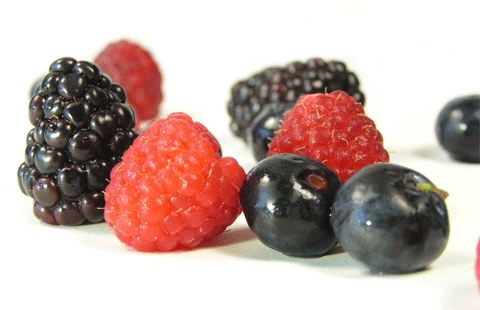
5. Berries, Berry Good Food for Your Brain


If you’re not a vegetable person, you can rely on fruit, especially berries, to improve your brain health. For example, blueberries are well known for their role in improving motor skills as well as your overall learning capacity. They are often called the best berry for your brain, and today you may notice the plethora of products using blueberries. Most berries, including blackberries, blueberries, raspberries, and others, are full of antioxidants that are great for boosting the brain. You can help reverse the effects of aging on the brain by eating these berries once a day. Berries are sometimes referred to as “super-fruits” because most of them contain fisetin and flavenoid, which are great for improving your memory and allowing you to easily recall past events. A delicious and helpful food for the brain.

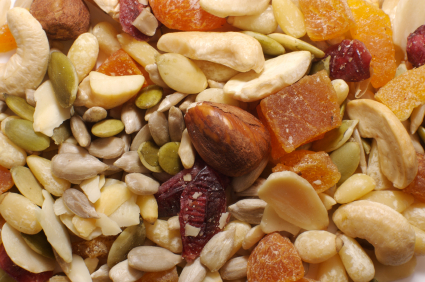
4. Nuts and Seeds


Looking for a snack food that has everything good for the brain in it? In other words, good brain food, then look no further than nuts and seeds… The good thing about this is that all types of nuts are included. This means peanuts, hazelnuts, cashews, almonds, walnuts, pecans, pumpkin seeds, sunflower seeds, and any other type of nut or seed you can think of, are good for your brain. Nuts and seeds are full of Omega-3 and Omega-6 fatty acids, as well as folate, vitamin E, and vitamin B6. All of these nutrients allow you to think more clearly. They also help you think more positively, because Omega-3 and Omega-6 fatty acids work as natural antidepressants. Some seeds and nuts are also full of thiamine and magnesium, which are great for memory, cognitive function, and brain nourishment.

3. Leafy Green Vegetables


Leafy green vegetables such as cabbage, kale, spinach, and others, while not very well-liked by children, are excellent for the brain of children and adults alike. These vegetables help greatly when it comes time to remember old information and process it like you just learned it yesterday. This is because these foods are often full of vitamin B6, B12, and folate, which are great compounds needed within the brain to break down homocystein levels, which can lead to forgetfulness and even Alzheimer’s disease. These vegetables are often very high in iron content. If there is not enough iron in-take, cognitive activity slows down greatly. So when mom always urged you to eat your spinach, now you know why: Veggies are a food good for your brain.

2. Fish


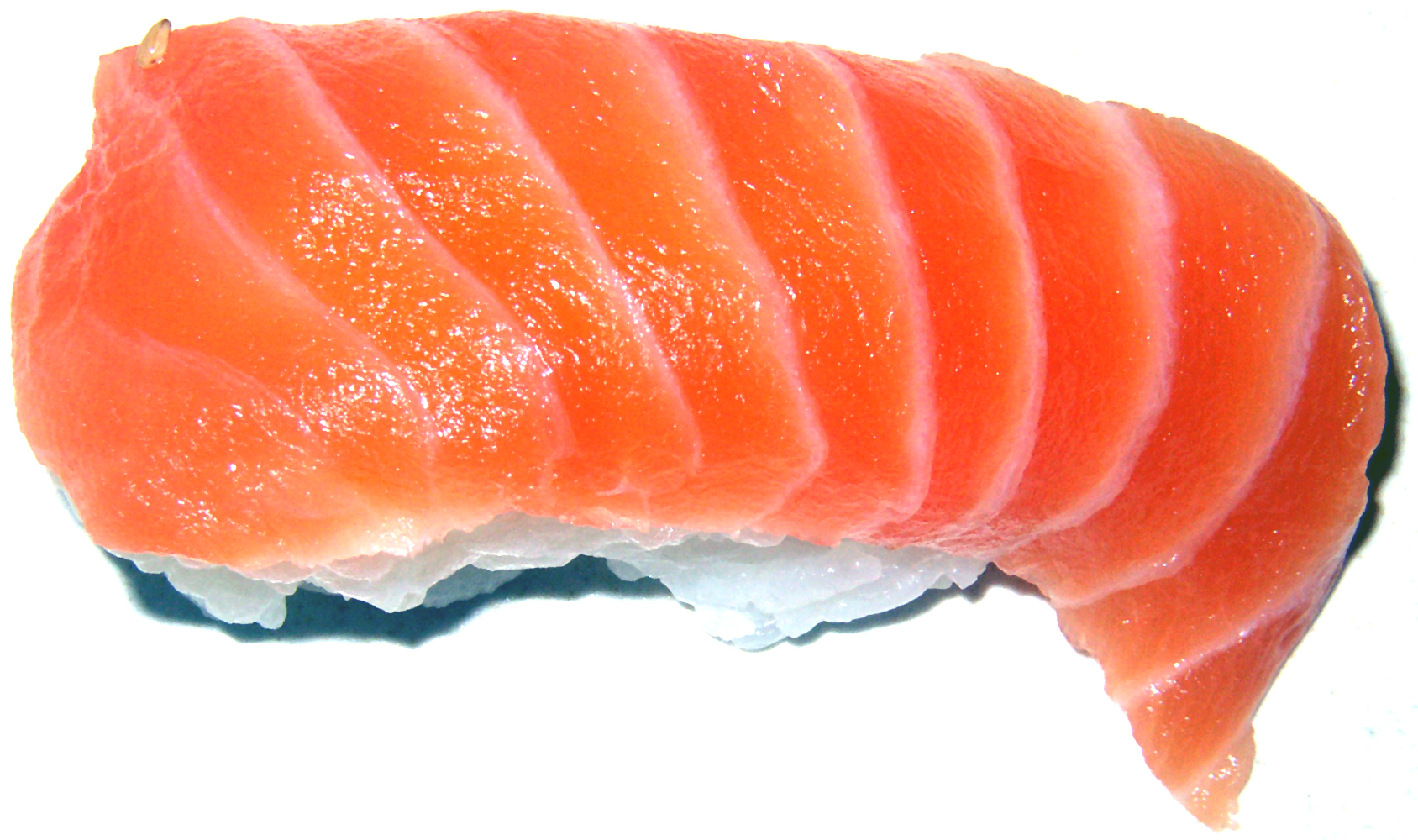
Eating fish overall is greatly beneficial to your health, especially that of your brain. Fish is full of Omega-3, which is a fatty acid known to be highly beneficial to the body in various aspects. Eating one serving of fish a week can highly decrease one’s chances of getting Alzheimer’s disease. These fatty acids help with brain function because they coat the neurons that at times have a fatty acid layer that becomes stiff due to a high content cholesterol and saturated fat in the body. Omega-3s will coat the neurons with good fat, allowing them to move easily throughout the brain. Omega-3s also provides more oxygen to the brain, as well as allows one to retain new information while still remembering old information. The best fish to eat for brain health are salmon, tuna, and herring.

1. Chocolate


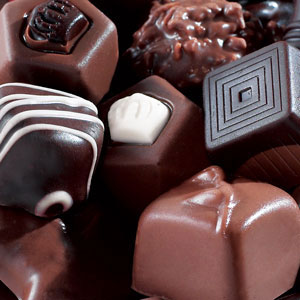
While eating hundreds of Hershey bars may make you sick, and drinking a lot of hot cocoa in a day just may do the same, the main ingredient in these oh-so-delicious foods, cocoa, is said to be very nutritious for the brain. Scientists have proven that the antioxidant content found in just two or three tablespoons of cocoa powder is much stronger than those antioxidants found in other foods, such as green tea or red wine. The main antioxidant found in cocoa, known as flavonols, is said to help increase blood flow to the brain. While normal milk chocolate lacks flavonols, you will find plenty of it in dark chocolate. And isn’t it great news to know that chocolate is good for your brain. Finally some health news that we can all bite off. Just don’t try to convince your brain, it won’t believe you.

Top 10 Terrorist Attacks

10.  Bombing of USS Cole

uss-cole
Fatalities: 17; Injuries: 39
Terrorists usually pursue what are termed “soft targets”.  These are areas or property (including people) that offer little in the way of security or threat to the terrorist themselves.  It’s rare, therefore, that acts of terror are carried out on military targets.  Such, was the case, however, on October 12, 2000, when suicide bombers attacked the American warship, USS Cole.  The Cole was in port at Aden, Yemen to take on fuel.  Incidentally, this was the same port in which Al Qaeda attempted a suicide attack on the USS The Sullivans earlier in the year.  Without any warning to the contrary, security around the warship was light.  A small motorboat, laden with explosives, sped up to the anchored ship and exploded on the port side.  The small boat contained 400-700 pounds of explosives that caused a 40×40-foot rupture in the Cole’s hull.  The explosion occurred near the galley of the ship, where sailors were gathering to eat.
Al Qaeda, in the ongoing efforts directed against America, claimed responsibility.  US Naval forces, as a result, increased port security measures, but the damage was already done.  Al Qaeda, according to intelligence reports, realized a significant rise in recruitment and financing as a result of this success against an American military target.

9.  Anthrax Letter Attacks

anthrax-attack-2001
Fatalities: 5; Injuries: 17
With the nation already on edge following the 9/11, attack the nation was again coping with the threat of terror just weeks later.  On September 18 and October 9, 2001, letters were mailed to several media news outlets, and two U.S. Senators, that contained the deadly chemical agent Anthrax (in powder form).  The notes that were included with the letters pointed to extremist religious groups.  As several people were exposed, and subsequently killed, from Anthrax exposure, the level of anxiety around the nation was high.
Investigators, however, soon became convinced that the attack was not carried out by any foreign religious group, such as Al Qaeda.  The investigation began to focus on Dr. Bruce E. Ivins, who was a scientist employed at a Federal bio-defense lab.  Dr. Ivins soon became the FBI’s primary suspect.  With federal charges being considered, Dr. Ivins committed suicide on July 27, 2008.  Several weeks later, federal prosecutors announced that Dr. Ivins was the sole perpetrator of the Anthrax attack.  This attack was the second of only two bio attacks to be carried out in the US.  It resulted in government officials taking Cipro, a powerful antibiotic, and increased security and scrutiny of mail.

8.  Salmonella Attack

salmonella-attack
Injuries: 750
The threat of a biological attack has garnered a good deal of attention and concern in recent years.  The threat, and its potential for harm, is clearly evidenced by the salmonella attack in Oregon.  From September 9-19, 1984, several hundred people were deliberately poisoned by salmonella spores.
The attack was perpetrated by a cult-like group called the Rajneeshee.  The group was led by an Indian mystic named Bhagwan Shree Rajneesh.  The group maintained a compound in Wasco County, Oregon.  The Rajneeshee were interested in gaining control of one of the open seats on the local circuit court.  As such, a conspiracy was hatched to incapacitate the voters in The Dalles, Oregon, who made up the largest block of voters in the upcoming election. To this end, salad bars in 10 restaurants were contaminated with Salmonella spores, and two county commissioners had their drinking water contaminated.
This was the first ever bio attack on the US, and remains the largest.  Rajneesh was never prosecuted for the attack, but was eventually deported to India on other grounds.

7.  Mid-Air Bombing of Pan Am Flight 103

Pan-Am-103
Fatalities: 270; Injuries 12
Planes are a prime target for terrorist.  This fact was made shockingly clear on December 21, 1988, when Pan Am Flight 103 from Heathrow to JFK exploded in mid-air over the town of Lockerbie, Scotland.  The destruction of the plane was complete; all passengers and crew were killed.  Additionally, falling debris from the explosion struck homes in Lockerbee and caused injuries to a number of residents.  A number of extremist groups claimed responsibility, and investigators quickly determined that a bomb did indeed cause the explosion.  It was believed that the attack was in response to the shooting down of Iran flight 655 in July of that year.
As the investigation continued, officials came to believe that the attack was sanctioned by the Libyan government.  A Libyan national, Abdul-Basit al Megrahi, was eventually apprehended, charged and found guilty in connection with the attack.  In 2003, Libya admitted responsibility for the attack (but still displayed no guilt).

6.  Bombing of Marine Barracks

marine-barrack-bombing
Fatalities: 301; Injuries: 161
For decades, the Middle East has been a hot bed for political unrest.  Such was the case in the early-1980’s, when the United Nations established a peacekeeping force in Lebanon, in an attempt to settle unrest in the area.  It didn’t work.  On October 23, 1983, two suicide truck bombs breached the security perimeter of the UN compound that was housing U.S. Marines and French Paratroopers.  Combined, the truck bombs carried 12,000 pounds of TNT.  The resulting explosion demolished the compound.  241 U.S. servicemen (220 of them Marines) were killed.
A group called The Islamic Jihad (suspected of being a front for the organization Hezbollah) claimed responsibility, citing America’s unwanted presence in the area.  As a result of the bombing, the UN soon pulled its peacekeeping forces out of the area.  The attack represented the largest, and deadliest, one-day death toll for the Marines since the battle of Iwo Jima in World War II.

5.  Truck Bombing of U.S. Embassies

embassy-truck-bombing
Fatalities: 303; Injuries: 4,954
Prior to 9/11, acts of terror against the U.S. centered largely on targets on foreign soil.  Such was the case with the 1998 bombings of the U. S. Embassies in Nairobi, Kenya and Dar es Salaam, Tanzania.  Truck bombs, carrying up to 17 tons of high explosives, were detonated within minutes of each other at the site of each embassy.  While the intended targets were American property and personnel, the vast majority of the casualties were indigenous civilians.  Twelve Americans were killed, and both embassies were heavily damaged.  So-called collateral damage was widespread in the neighborhoods adjacent to the embassies, and several thousands of civilians were injured or killed.
The attack was linked to an extremist group call The Egyptian Islamic Jihad (EIJ).  The group claimed it was retaliating for American involvement concerning the torture and extradition of four members of the EIJ.  Both Osama bin Laden and Ayman al-Zawahiri came to American attention as a result of the attack.

4.  Beslan Massacre

beslan-memorial
Fatalities: 366; Injuries: 747
Acts of terror are not confined to the United States.  Terrorism is a worldwide problem, as our number four entry illustrates.  On September 1, 2004, armed Ingush and Chechen insurgents seized control of School Number One in Beslan, Russia.  The insurgents held 1,100 hostages (of which 777 were children) and demanded an end to ongoing Chechen military dispute between Chechnya and Russia.
By the 3rd day of the siege, Russian officials decided to act, and assaulted the school with tanks, heavy weapons and military troops.  An intense gun battle ensued that resulted in 30 insurgents killed.  Unfortunately, 334 hostages were also killed (of which 186 were children).  The backlash of the disastrous assault by Russian forces led to a number of policy changes, as well as widespread international criticism.

3.  Oklahoma City Federal Building Bombing

oklahoma-city-bombing
Fatalities: 169; Injuries: 675
While acts of terror seem to be carried out primarily by religious extremists, this wasn’t the case with the number three entry on our list.  On April 19, 1995, Timothy McVeigh exploded a truck bomb that he positioned in front of the Alfred P. Murrah building in Oklahoma City, Oklahoma.  The bomb itself was homemade, using chemical ingredients that were readily attainable.  The resulting explosion tore into the Federal building, demolishing much of it and causing widespread damage to the surrounding area.
Damages, in fact, totaled more than $652 million. Timothy McVeigh, and co-conspirator Terry Nichols, were quickly linked, charged and convicted for the attack.  The public soon became aware of the home-grown terrorism.  McVeigh, a militia sympathizer, espoused a hatred of the US government as his motivation.  McVeigh was sentenced to death by lethal injection and Nichols was given life without parole for their roles in the attack.  Prior to 9/11, this attack was the deadliest act of terrorism on American soil.

2.  1st World Trade Center Bombing

wtc-bombing
Fatalities: 6; Injuries: 1,040
While the 9/11 attack on the World Trade Center was devastating, it was not the first attempt to bring the two towers down.  On February 26, 1993, a yellow Ryder moving van was driven into the World Trade Center’s public parking garage in the North Tower.  Several minutes later, 1500 pounds of nitrate-hydrogen gas exploded, punching a hole 98 feet wide through four levels of concrete.
The plan was carried out by a group that called itself The Liberation Army, 5th Battalion.  This is believed to be a front, however, as this attack was financed by Khalid Sheikh Mohammed, who was the primary planner for the 9/11 attack. The attackers hoped to collapse the North Tower and have it crash into the South Tower, causing thousands of deaths.  Six men were eventually charged with, and convicted of, the bombing.

1.  9/11 Attack

911-attack
Fatalities: 2,993; Injuries: 8,900
Any discussion concerning acts of terror has to begin with the September 11, 2001 attack.  By any measure, it was the most brazen and deadliest terrorist attack in recorded history.  Initiated by an extremist organization named Al Qaeda, and its leader Osama bin Laden, the attack led to America’s current War On Terror.
The attack itself was a coordinated affair: nineteen members of Al Qaeda managed to hijack four airliners.  Two of these planes were crashed into New York City’s World Trade Center.  A third plane was crushed into the Pentagon in Washington DC.  The fourth plane, which is believed to have been headed for targets in Washington DC as well, crashed into a field in Summerset County, Pennsylvania, after passengers attempted to regain control of the plane from the hijackers.
The damage was horrific.  Both World Trade Center towers were demolished – literally crashing to the ground.  The Pentagon was heavily damaged as well.  9/11 is the most lethal attack carried out against the US, and continues to have ramifications in the nation’s foreign and domestic policies.